Maritime Heritage Pavilion — the deck visitors steered
Brief
The heritage authority wanted a flagship pavilion that didn't talk at visitors. Most museum installations broadcast — a video plays, a placard explains, the visitor watches and moves on. The brief was to invert that. Let visitors steer the content. Let them see what they cared about. Make them stay longer because the story responded to them.
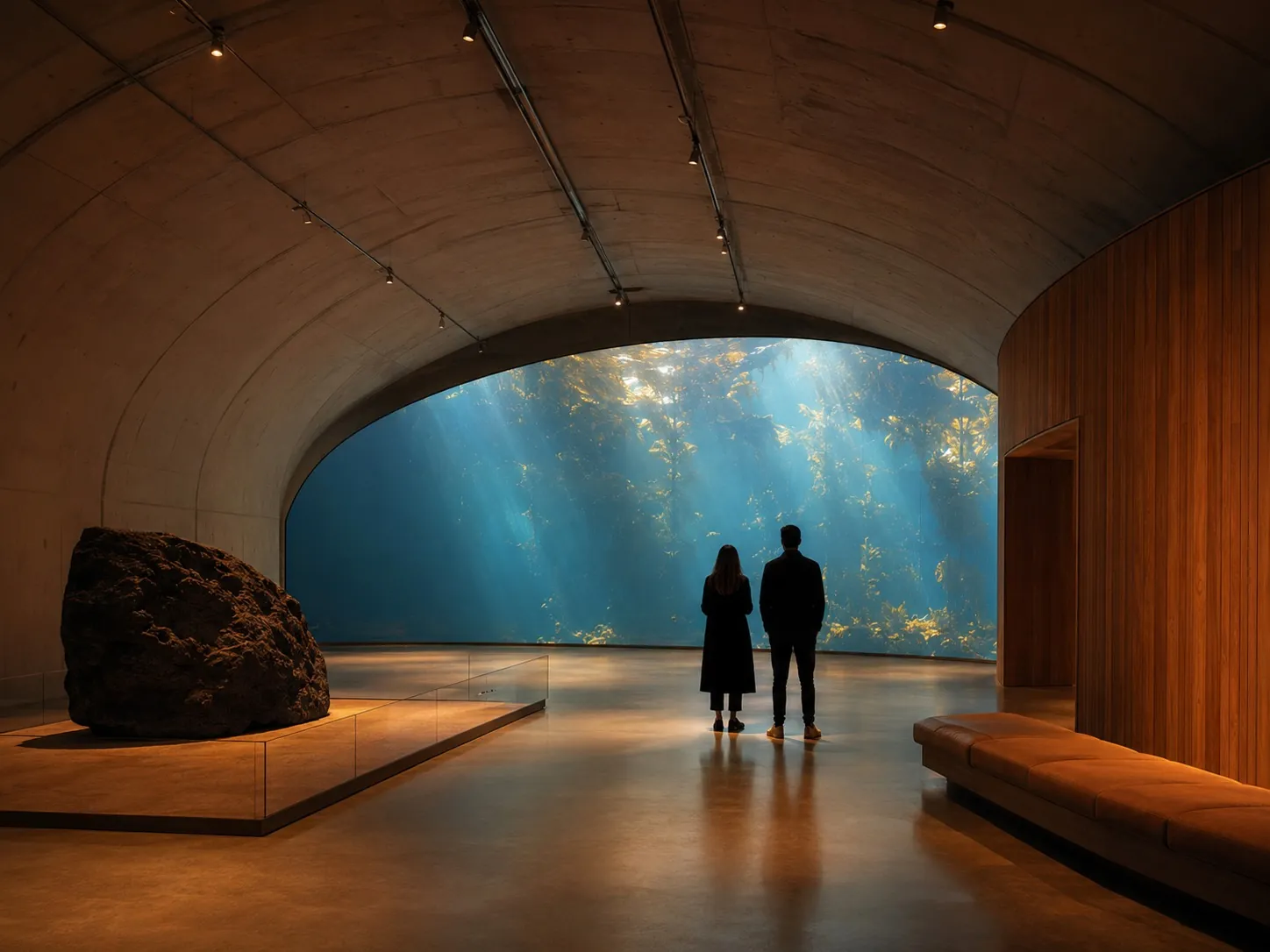
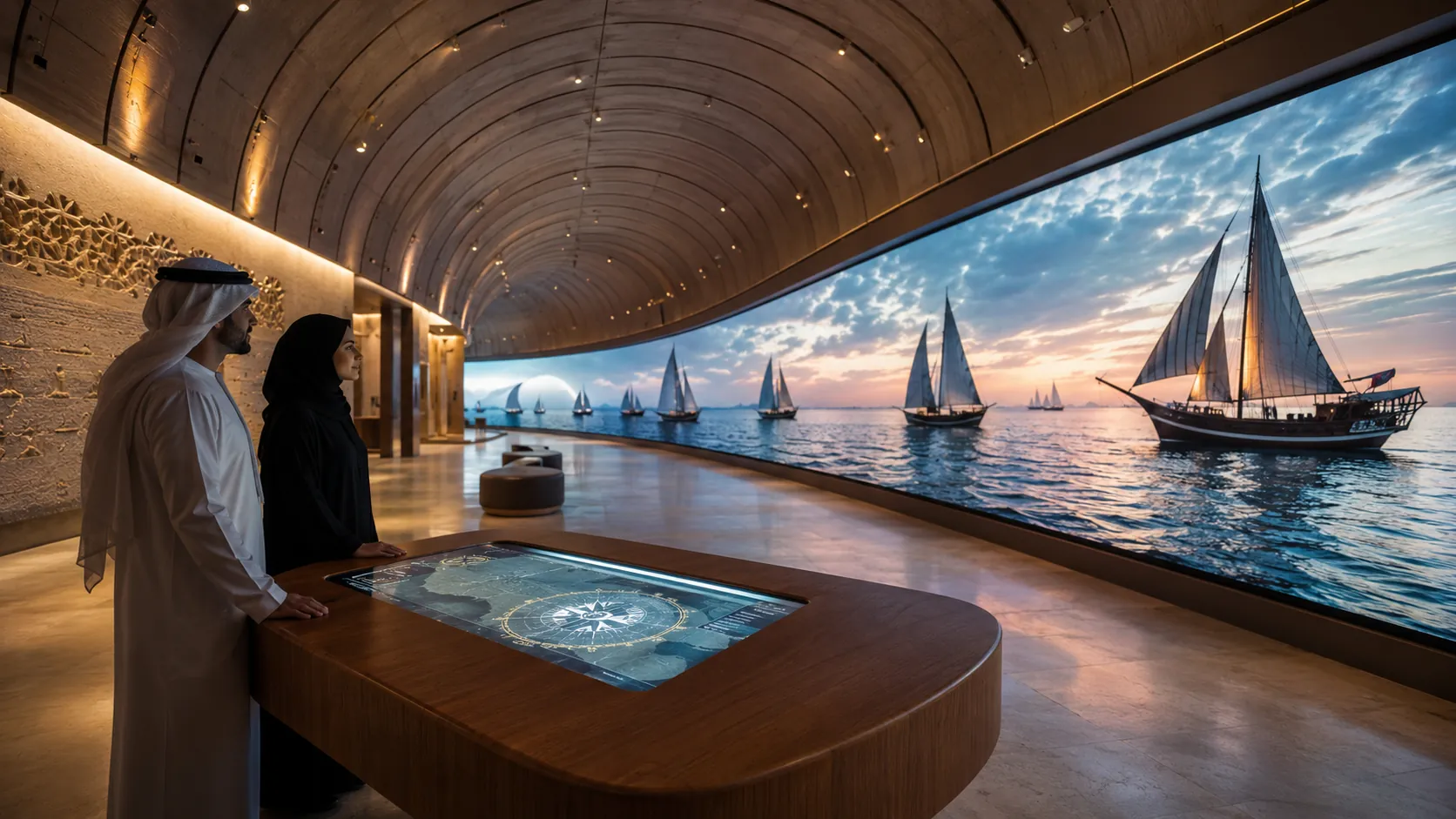
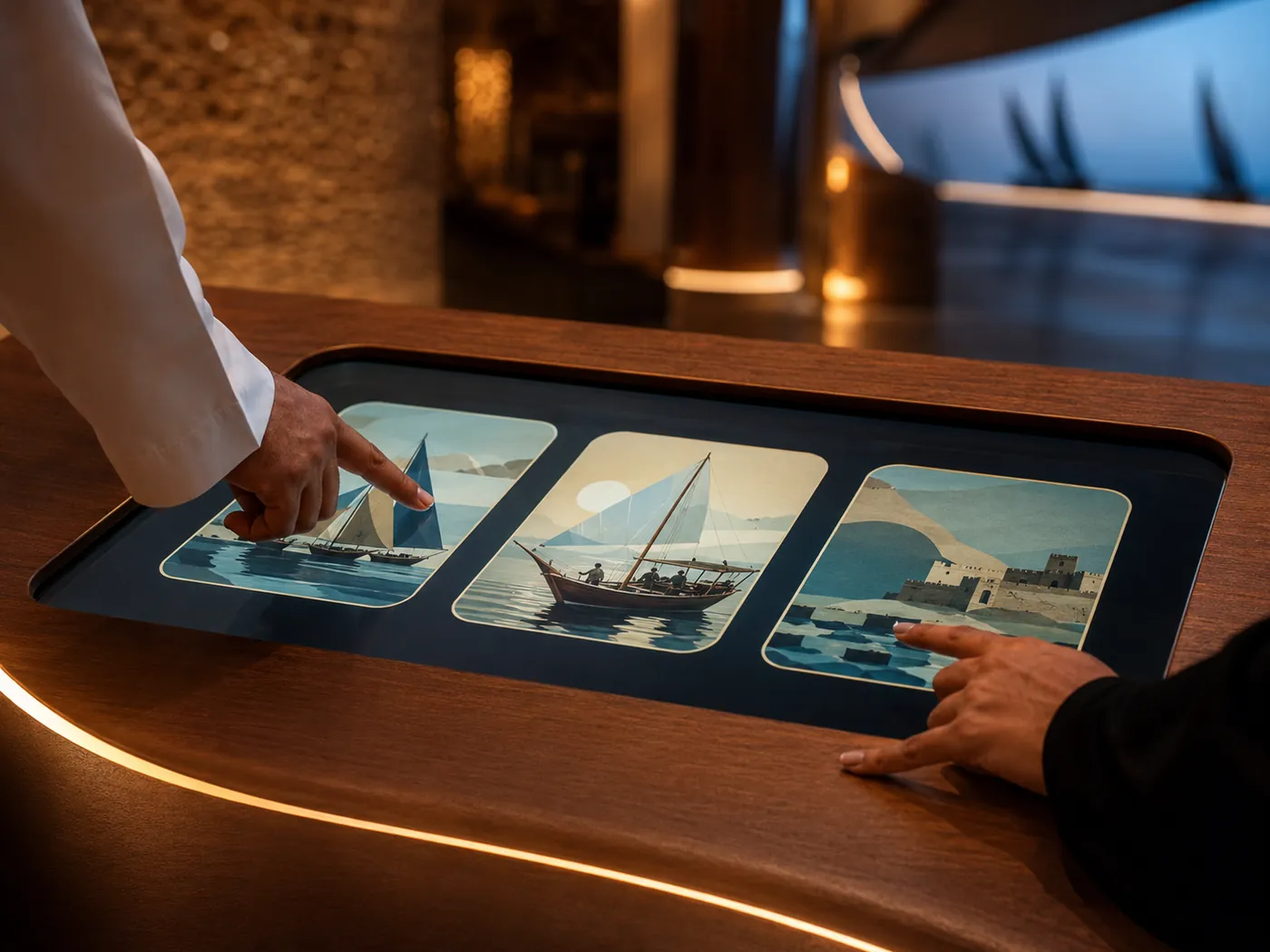
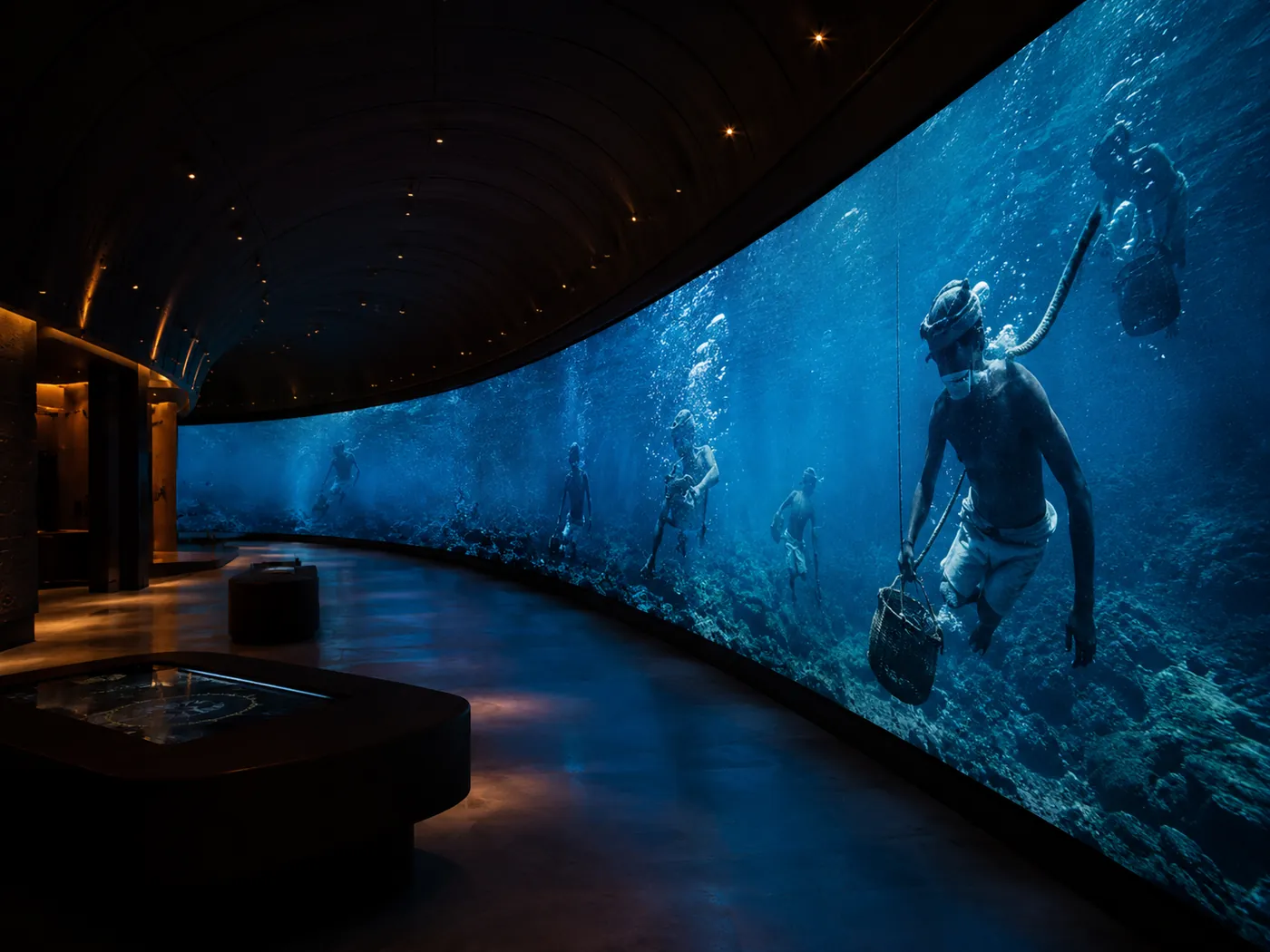
The constraint was significant. The space was a 14-metre curved gallery with a barrel-vaulted ceiling. The exhibition had to feel cohesive across six interaction points, not feel like six separate kiosks. The video wall had to feel architectural, not bolted on. The joinery had to integrate touch hardware without looking like equipment furniture.
Approach
We started with the narrative — five stories from the UAE's maritime history. Each story had a visual lead, a soundscape, and supporting artefacts. The interaction layer had to make those stories selectable without overwhelming the visitor with menus.
We landed on six touch consoles arranged along the curve of the room, each console fabricated as a single piece of curved joinery with the touch surface set flush into the top. Each console had three points of entry into each story — "the moment," "the people," and "the trade." Selecting any of them on any console synchronised the curved video wall opposite to that chapter, with directional audio steering the visitor's ear to the right speaker zone.
The wall itself was a 12-metre curved LED panel, content-managed by a custom CMS we wrote for the institution's content team. They publish updates without us. They've added two new chapters since handover.
What was built
- Six curved-edge touch consoles, joinery fabricated in-house, capacitive multi-touch surfaces (10-point)
- 12-metre curved LED video wall, 1.2mm pixel pitch, 4K content native
- Content synchronisation engine — any console can drive the wall, conflict resolution on simultaneous taps from multiple consoles
- Bilingual content system (Arabic / English) with automatic language switching per console
- Directional audio routing — content audio steers to the nearest two speakers, ambient soundscape plays room-wide
- Content management system for the institution's content team, with preview-to-publish workflow
- Remote monitoring dashboard for our support team
Outcomes
- Average visitor dwell time: 11 minutes (the brief's target was 6)
- Chapters viewed per visit: 3.2 average
- Language split: 47% Arabic, 53% English
- Unplanned downtime since handover: zero across nine months
Tech stack
- Custom Node.js content synchronisation server with WebSocket transport between consoles and wall
- React + Electron on the touch consoles
- LED wall driven by Brompton Tessera processor, content pre-rendered for native 4K delivery
- Crestron control system for power, lighting, and HVAC integration
- Joinery: CNC-routed solid timber with PU spray finish, custom touch overlay glass cut to console curve
- Hardware: Iiyama industrial touch displays, Genelec speakers
Closing
Maritime Heritage Pavilion is the project that anchored HOX Digital's museum and cultural sector positioning. The console-driving-wall pattern is now part of our standard toolkit for heritage and brand-experience venues across the GCC.
Status: Live since November 2024. Content team has published two additional chapters.
Need help with your next project?
We've been designing interactive installations and immersive environments across the UAE since 2008. Let's talk about what you're building.
Get in touch